Name the source of truth.
Choose where a change must be recorded first. If several people edit the schedule, that source is often digital.
Set up the weekly calendar routine →
Free · private · honest recommendation
Decide what belongs on the wall, what needs a reminder, and whether paper, digital, or a hybrid system should be the household source of truth.
Plan my setupAnswer four practical questions. The result may recommend paper, a paper-and-digital hybrid, or a digital-first system.
Your recommendation will appear here. It will not assume that paper is always better—or that an expensive screen is necessary.
Your answers stay on this page and are not saved or sent to Malona. We count the recommendation type so we can improve the tool, without transmitting your household answers.
A command center with one job
A shared system works when the right information is current, easy to see, and close to the decisions it affects. It does not need to hold every task, document, or private appointment.
Choose where a change must be recorded first. If several people edit the schedule, that source is often digital.
Set up the weekly calendar routine →Kitchen, entry, mudroom, or hallway beats a decorative corner that nobody checks while leaving the house.
Use the complete wall-calendar checklist →Write the household’s most crowded normal day at real size. If it becomes unreadable, the grid or system is too small.
Measure the full calendar footprint →Ten minutes can catch transportation conflicts, forms, meal constraints, and changes before they become morning surprises.
Build a short weekly reset →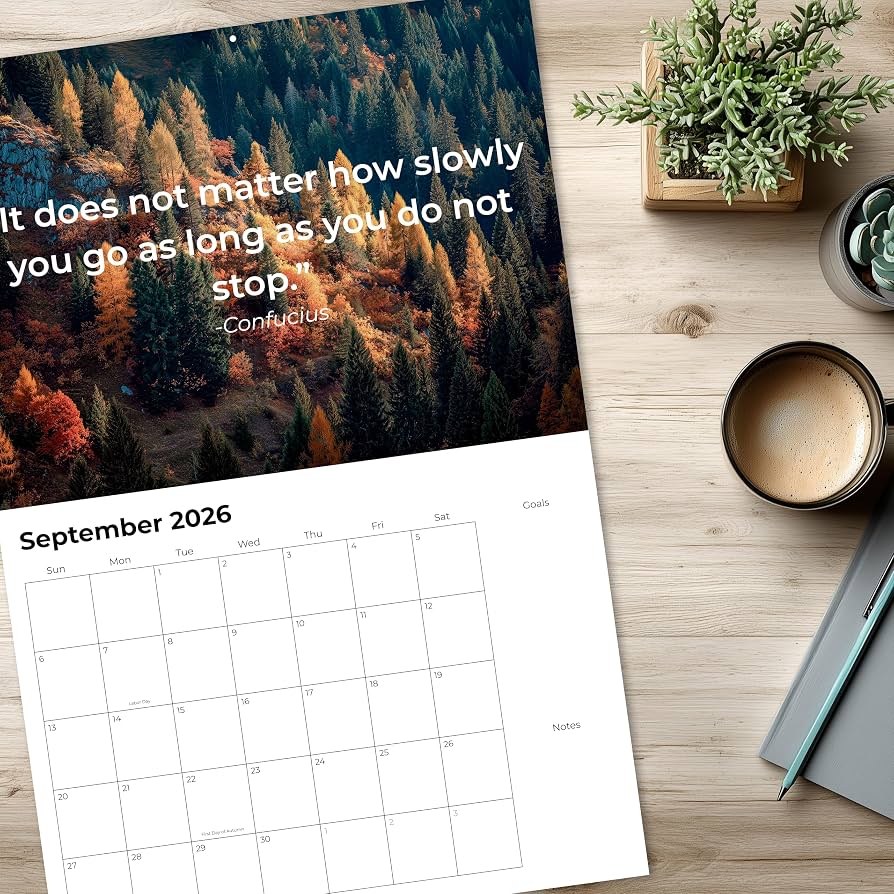
When paper fits the job
The current Malona Inspirational Quotes Calendar opens to 12 × 18 inches and pairs a spacious monthly grid, goals, notes, and major U.S. holidays with nature photography and meaningful words. It suits households with a light-to-moderate shared schedule; dense or frequently changing schedules may need a digital source of truth.
Shared schedule questions
It is one visible place for the information a household repeatedly needs—often a shared calendar, a pen, keys, current papers, and a short list of items that require action. It should simplify decisions rather than collect every household detail.
Paper is strong for shared visibility and a calm month-level view. Digital calendars are stronger for automatic reminders, frequent changes, remote updates, and multiple editors. Many households use digital as the source of truth and paper as the shared glanceable view.
Choose a place the household already passes while preparing for the day, such as a kitchen, entry, mudroom, or hallway near bags and keys. Avoid a beautiful location nobody checks.
Base the choice on the full open footprint, viewing distance, and the number of short entries on a busy date. Large grid is not a standardized measurement, so inspect interior photos and test the date-square space.
Only when the schedule is relatively stable and reminder needs are low. If plans change frequently, designate one digital source of truth and update the wall on a regular schedule.