Plan for the week you actually have
Mark late meetings, school events, travel, and low-energy evenings before choosing meals. Some nights need something fast, prepared ahead, flexible, or already cooked.

Meal-planning resource center
Weekly meal planning works best when it begins with the schedule, uses what is already available, and leaves room for leftovers and changing plans. These guides focus on a repeatable process rather than a perfect menu.
Mark late meetings, school events, travel, and low-energy evenings before choosing meals. Some nights need something fast, prepared ahead, flexible, or already cooked.
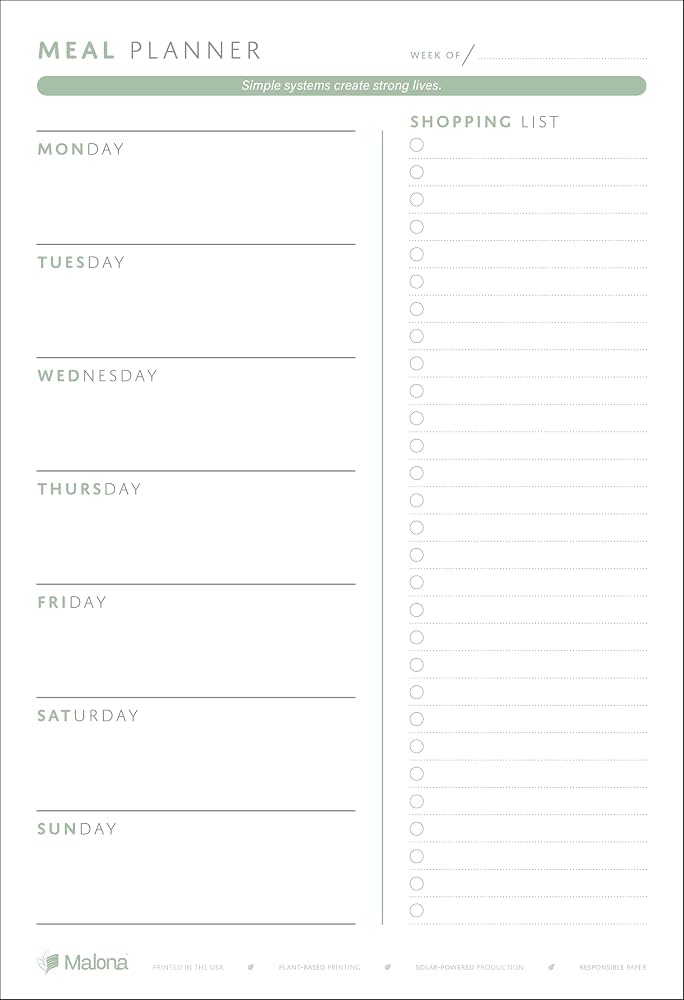
Build the grocery list beside the menu. Check the kitchen first, add only missing ingredients, and note quantities or the intended meal when an item could be forgotten.
A brief note about leftovers, timing, or a meal the household enjoyed is enough. The system becomes easier through small observations, not through a more complicated template.
Learn the method
Each guide answers one distinct question, then links to the most relevant Malona tool when a paper product can support the practice.
Weekly meal planning · 9 minute read
A repeatable weekly system for checking what you have, choosing realistic meals, building one grocery list, planning leftovers, and making the next week easier.
Read the guide →Meal planning · 8 minute read
A simple weekly meal-planning method that turns seven flexible meal ideas into one practical grocery list without overplanning.
Read the guide →Meal-planner buying guide · 7 minute read
A buyer-focused guide to choosing a weekly meal planner with the right layout, grocery-list space, paper size, flexibility, and full-year page count.
Read the guide →Weekly planning · 8 minute read
A realistic weekly reset routine for clearing mental clutter, reviewing commitments, choosing priorities, and beginning Monday with fewer open loops.
Read the guide →The Malona difference · 7 minute read
A grounded look at how a fresh quote on each planner page can create a pause, support a weekly reset, and turn encouragement into one concrete action.
Read the guide →Tools for the practice
Learn on Malona.net, compare the details here, and use the exact Amazon listing for current price, delivery, reviews, returns, and checkout.
Common questions
No. Plan only what will realistically be prepared, and leave space for leftovers, pantry meals, schedule changes, and food away from home.
It helps connect each purchase to a planned meal and reduces the copying step that often causes omissions.
Yes. An undated 52-week pad can begin with any week and does not lose pages when the routine pauses.