01Daily planning · 7 minute read
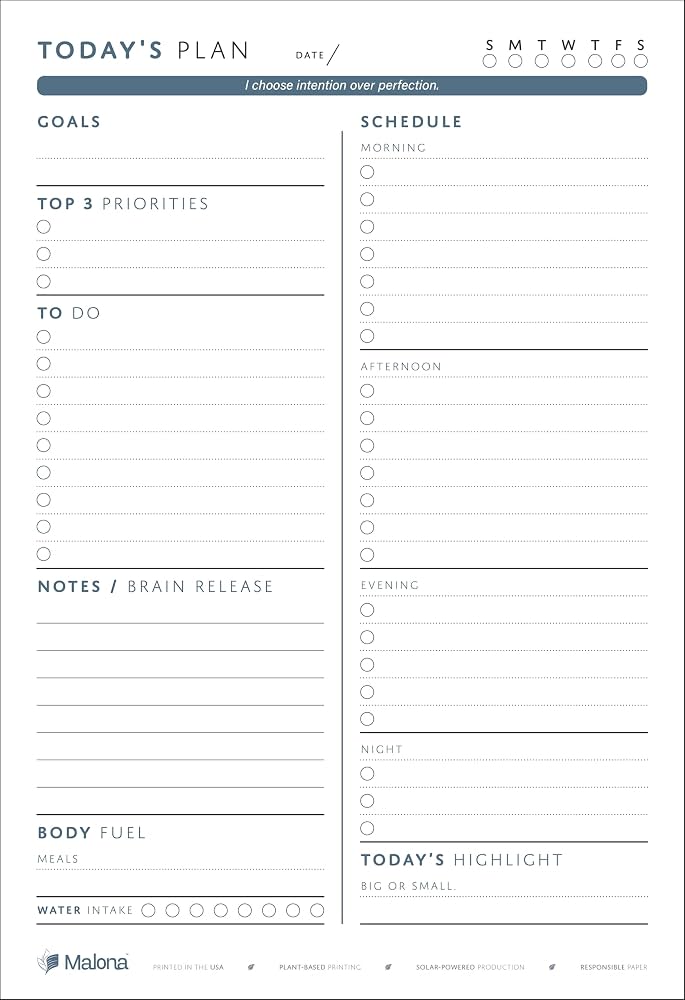
A practical, low-pressure daily planning routine for choosing priorities, time blocking, capturing loose thoughts, and ending the day with perspective.
Read the guide →02Daily planning · 8 minute read
A practical Top 3 priorities method for turning an overloaded task list into three meaningful outcomes and a realistic plan for the day.
Read the guide →03Clear the mental overflow · 8 minute read
Use a five-step brain-dump method to capture mental clutter, sort what matters, choose next actions, and build a daily plan without copying everything onto it.
Read the guide →04Time management · 7 minute read
A flexible seven-step time-blocking method for turning priorities into a realistic daily schedule without planning every minute.
Read the guide →05Planning for busy brains · 8 minute read
A simple paper-planning routine built around visible priorities, flexible time blocks, brain-dump space, and a pressure-free way to begin again.
Read the guide →06Choose the right format · 7 minute read
Compare the benefits and tradeoffs of an undated daily planner for irregular schedules, skipped days, project seasons, and people who want a low-pressure restart.
Read the guide →07Planning tools compared · 9 minute read
Compare paper and digital planners by attention, reminders, future scheduling, flexibility, privacy, and the kind of planning decision each handles best.
Read the guide →08Planner comparison · 8 minute read
Compare a tear-off daily planner notepad with a bound planner book by flexibility, visibility, portability, planning depth, and the ease of starting again.
Read the guide →09Career and work · 8 minute read
A practical workday planning method for separating urgent requests from meaningful priorities, protecting focus time, and ending with a cleaner handoff to tomorrow.
Read the guide →10Weekly planning · 8 minute read
A realistic weekly reset routine for clearing mental clutter, reviewing commitments, choosing priorities, and beginning Monday with fewer open loops.
Read the guide →